If you have ever done hundreds of crunches, cut out bread and still watched your midsection refuse to budge, you are not lazy and you are not doing it wrong. Belly fat is genuinely the most resistant fat on the body to shift — for reasons that are hormonal, biological and largely outside your direct control. The good news is that some things genuinely work, and a few widely repeated ideas simply do not. This guide separates the two honestly.
Belly fat isn’t one thing
The first thing to understand is that the fat around your middle is actually two very different tissues that behave in almost opposite ways.
Subcutaneous fat sits directly beneath the skin — the soft layer you can physically pinch. It is relatively less metabolically active, it responds (slowly) to diet and exercise, and it carries a lower cardiovascular risk. Because it lies near the surface, it is the only abdominal fat that non-surgical body-contouring treatments can reach.
Visceral fat is a different beast entirely. It sits deep inside the abdominal cavity, wrapped around your liver, kidneys and intestines. You cannot pinch it — it is not detectable by touch or a tape measure alone — and it is highly metabolically active, pumping out inflammatory cytokines and free fatty acids. It is this deep visceral fat, not the pinchable layer, that is strongly linked to insulin resistance, type 2 diabetes, cardiovascular disease and metabolic syndrome. Reducing it matters for your health, not just your silhouette.
The spot-reduction myth
Here is the single most important — and most misunderstood — fact about belly fat: you cannot spot-reduce it. No amount of crunches, planks or ab-roller sessions will selectively burn the fat sitting over your stomach. Exercising a muscle strengthens that muscle; it does not melt the fat lying on top of it.
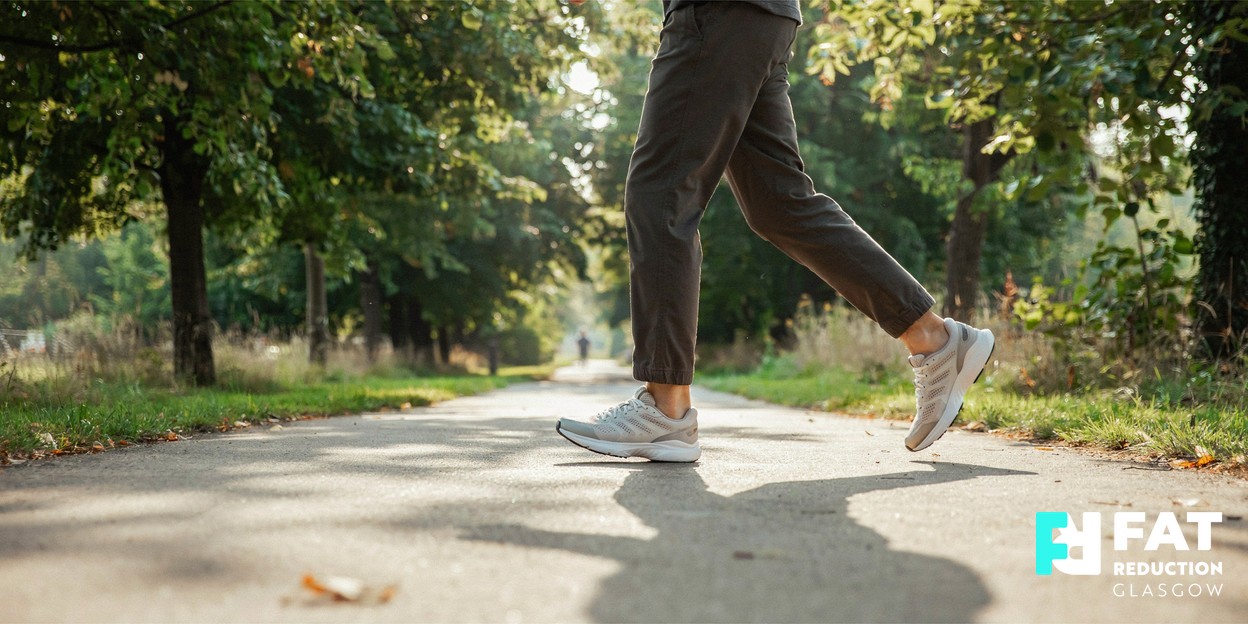
The science on this is unusually settled. A landmark meta-analysis reviewing 89 separate studies concluded that no intervention preferentially targets visceral fat, and that when you do lose fat, the percentage decrease in visceral fat always exceeds the loss of subcutaneous fat. In plain English: your body decides where fat comes off, and it tends to release deep belly fat relatively readily once you are in an overall calorie deficit — but you cannot aim the effect at one patch of skin. This is exactly why a whole-body approach, one that gently lowers your total fat over time, is the only thing that reliably shifts the midsection. General activity and consistency, not targeted ab work, do the heavy lifting.
Why belly fat is so stubborn
If losing belly fat feels harder than losing weight elsewhere, that is because it genuinely is. Several biological mechanisms conspire against you:
- Cortisol, the stress hormone. Visceral fat cells carry roughly four times more cortisol receptors than subcutaneous fat, which makes them disproportionately sensitive to chronic stress. When cortisol stays elevated — through work pressure, anxiety or poor sleep — it actively signals your body to store fat specifically around the abdomen.
- The cortisol–insulin loop. Raised cortisol pushes up blood glucose, which triggers insulin release, which in turn promotes fat storage. Left unchecked, the cycle feeds itself.
- Insulin resistance. Visceral fat drains free fatty acids straight into the circulation to the liver, driving insulin resistance — which then makes it harder still to lose fat. More visceral fat begets more visceral fat.
- Sex hormones. In women, the menopause transition shifts fat storage from the hips and thighs (the classic “pear”) towards the abdomen (the “apple”) as oestrogen declines. In men, falling testosterone drives the same visceral accumulation.
- Stubborn receptors. Subcutaneous belly fat is especially rich in alpha-2 adrenergic receptors, which actively suppress fat breakdown — meaning this depot is physiologically slower to mobilise during exercise than fat elsewhere on the body.
None of this is a character flaw. It is physiology, and understanding it is the first step to working with your body rather than against it.
Your body decides where fat comes off. The job is to create the conditions for it to let go — not to attack one patch of skin with crunches.
What actually works: diet, movement and sleep
So if crunches and cling-film wraps are out, what is in? The honest answer is unglamorous but effective: the things that lower your overall fat tend to lower your visceral fat first.
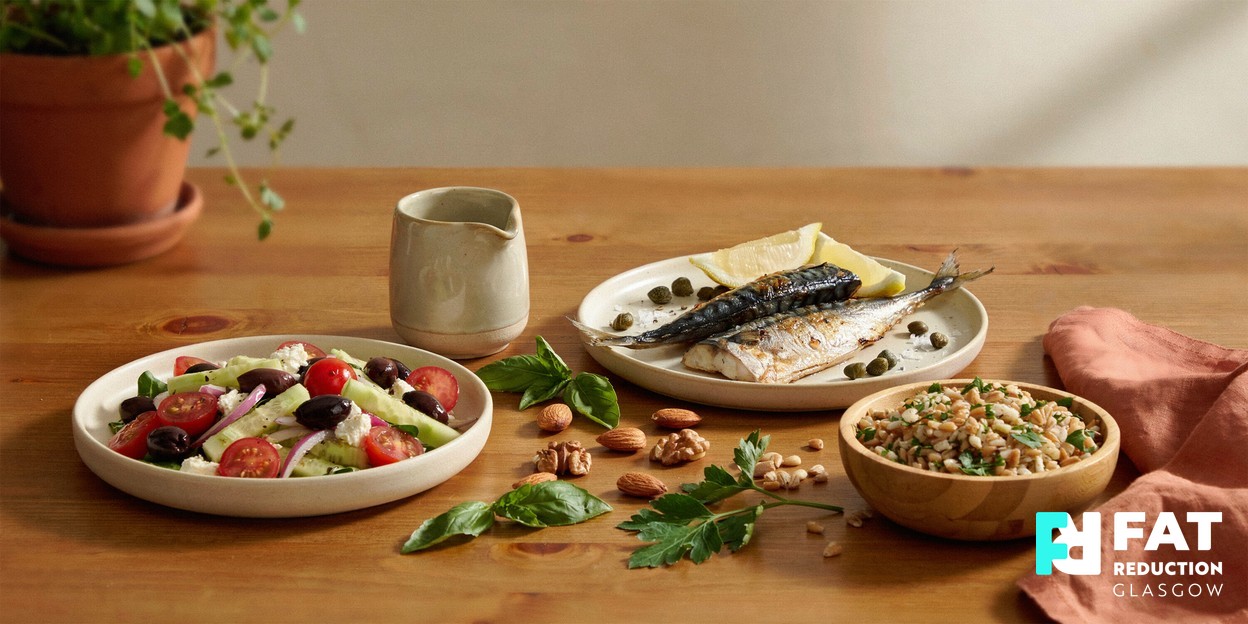
Diet is where the biggest wins are. Certain eating patterns have solid evidence for reducing deep abdominal fat specifically:
| Approach | Why it helps |
|---|---|
| Reduced refined carbohydrate / low-glycaemic eating | Lowers the chronic insulin spikes that drive abdominal storage |
| Mediterranean-style diet | Anti-inflammatory, high in fibre and healthy fats; linked to lower visceral fat |
| More soluble fibre | Each extra 10g a day is linked to around a 3.7% reduction in visceral fat over five years |
| More protein | Improves satiety and preserves muscle while you lose fat |
| Less ultra-processed food and added sugar | Fructose in particular is funnelled towards liver and belly fat |
The common thread is a modest, sustainable calorie deficit built from whole foods — not a crash diet.
Movement counts, but not the way you would think. Regular activity — brisk walking, resistance training, anything that raises your daily energy output — reduces both total and visceral fat, and building muscle nudges up your resting metabolism. It is consistency across weeks and months, not intensity in a single punishing session, that wins.
Sleep and stress are the overlooked half. Because cortisol drives abdominal storage, managing stress is not a nice-to-have — it is part of the mechanism. Even a single week of sleeping under six hours a night measurably raises cortisol and accelerates visceral fat gain. Mindfulness-based stress reduction has trial evidence for lowering cortisol and modestly trimming waist circumference. If your belly fat crept on during a stressful, sleep-deprived stretch, addressing the stressor may matter as much as the diet.
Where body contouring fits in
None of this means treatments have no role — but it is vital to be clear about what they can and cannot do. Non-surgical body contouring such as fat freezing works on the pinchable, subcutaneous layer only. It cannot reach the deep visceral fat around your organs, and it is not a weight-loss treatment.
What it can do, in the right person, is refine a stubborn, pinchable pocket that has held on despite a stable, healthy weight and consistent effort. Clinical reviews of cryolipolysis on the abdomen report calliper-measured fat reductions of roughly 15 to 28% in the treated pocket, with circumference changes typically in the region of 2 to 4 cm across a course of sessions — a mild-to-moderate refinement, not a transformation. HIFU and other energy-based options show broadly similar, modest results.
The person this suits is someone already at or near their target weight who wants to smooth a specific area — not someone hoping to lose a significant amount of weight. If your main goal is shifting visceral fat and lowering health risk, contouring is the wrong tool, and diet, movement and sleep are the right ones. We walk through the trade-offs in more detail in our guides to fat freezing explained and non-surgical versus surgical fat reduction.
What about weight-loss injections?
You will have seen a great deal in the press about the newer weight-loss injections. It is worth being clear and careful here: medicines such as semaglutide and tirzepatide are prescription-only medicines. They are not aesthetic treatments, they are not something an aesthetics clinic can advertise or supply, and they are only appropriate for certain people under proper medical supervision. Because they produce genuine, systemic weight loss, they do reduce visceral as well as subcutaneous fat — but any decision about them belongs with your GP or pharmacist, who can weigh the benefits, risks and suitability for you. We mention them only so the picture is complete, not as a recommendation.
Ready to talk it through?
The most honest summary is this: belly fat responds to a patient, whole-body approach — sensible eating, regular movement, decent sleep and managed stress — and there is no shortcut that lets you target it directly. Body contouring is a finishing tool for pinchable pockets once your weight is stable, not a way to lose weight or shift the deep fat that matters most for your health.
If you have a specific, stubborn area that has held on despite doing the right things, a consultation is the best way to find out whether fat freezing or another non-surgical option could genuinely help — or whether your goals would be better served another way. The team at Fat Reduction Glasgow will give you an honest assessment, realistic expectations and a plan that fits your body, not a sales pitch. Book a consultation and let us talk it through.
Pros & Cons
Pros
- A patient, whole-body approach — better diet, regular movement and good sleep — genuinely reduces belly fat, including the deep visceral fat that matters most for health
- Deep visceral fat is actually relatively responsive to overall weight loss once you are in a sustained, sensible calorie deficit
- For a stubborn, pinchable pocket at a stable weight, non-surgical body contouring can offer a modest, measurable refinement
Cons
- Spot reduction is a myth — no exercise or treatment can selectively burn fat from one chosen area
- Belly fat is hormonally stubborn, so results are gradual and depend on consistency over months, not weeks
- Body contouring reaches only pinchable subcutaneous fat, not visceral fat, and is not a weight-loss solution
Frequently Asked Questions
Can I target belly fat specifically with crunches or sit-ups?
No. Spot reduction is a myth. Exercising a muscle strengthens that muscle, but it does not selectively burn the fat lying on top of it. Your body decides where fat comes off, and it tends to release deep abdominal fat relatively readily once you are in an overall calorie deficit — but you cannot aim the effect at one patch of skin. Consistent whole-body activity and a sensible diet do far more for your midsection than any amount of targeted ab work.
What is the difference between visceral and subcutaneous belly fat?
Subcutaneous fat is the soft layer directly beneath your skin — the fat you can physically pinch. Visceral fat sits deep inside the abdominal cavity, wrapped around your organs. You cannot pinch visceral fat, and it is far more metabolically active, which is why it is strongly linked to insulin resistance, type 2 diabetes and cardiovascular disease. Non-surgical body contouring can only reach the pinchable subcutaneous layer, never the deep visceral fat.
Will fat freezing get rid of my belly?
Only in a specific sense. Fat freezing and similar non-surgical body-contouring treatments work on the pinchable, subcutaneous layer and can refine a stubborn pocket in someone who is already at or near a healthy, stable weight. They cannot reach deep visceral fat and they are not a weight-loss treatment. If your goal is to lose a meaningful amount of weight or reduce visceral fat, contouring is the wrong tool, and diet, movement and sleep are the right ones.
Why is belly fat so much harder to lose than fat elsewhere?
It is genuinely more stubborn, for biological reasons. Visceral fat carries roughly four times more cortisol receptors than subcutaneous fat, so chronic stress preferentially drives storage around the abdomen. Falling oestrogen at menopause and falling testosterone in men both shift fat towards the middle, and subcutaneous belly fat is rich in receptors that actively suppress fat breakdown. Understanding this helps you work with your body rather than blame yourself.
Do weight-loss injections work for belly fat?
The newer weight-loss injections are prescription-only medicines, not aesthetic treatments, and can only be considered for certain people under proper medical supervision. Because they produce genuine, systemic weight loss they do reduce visceral as well as subcutaneous fat, but any decision about them belongs with your GP or pharmacist, who can assess the benefits, risks and whether they are suitable for you. We mention them only so the overall picture is complete.